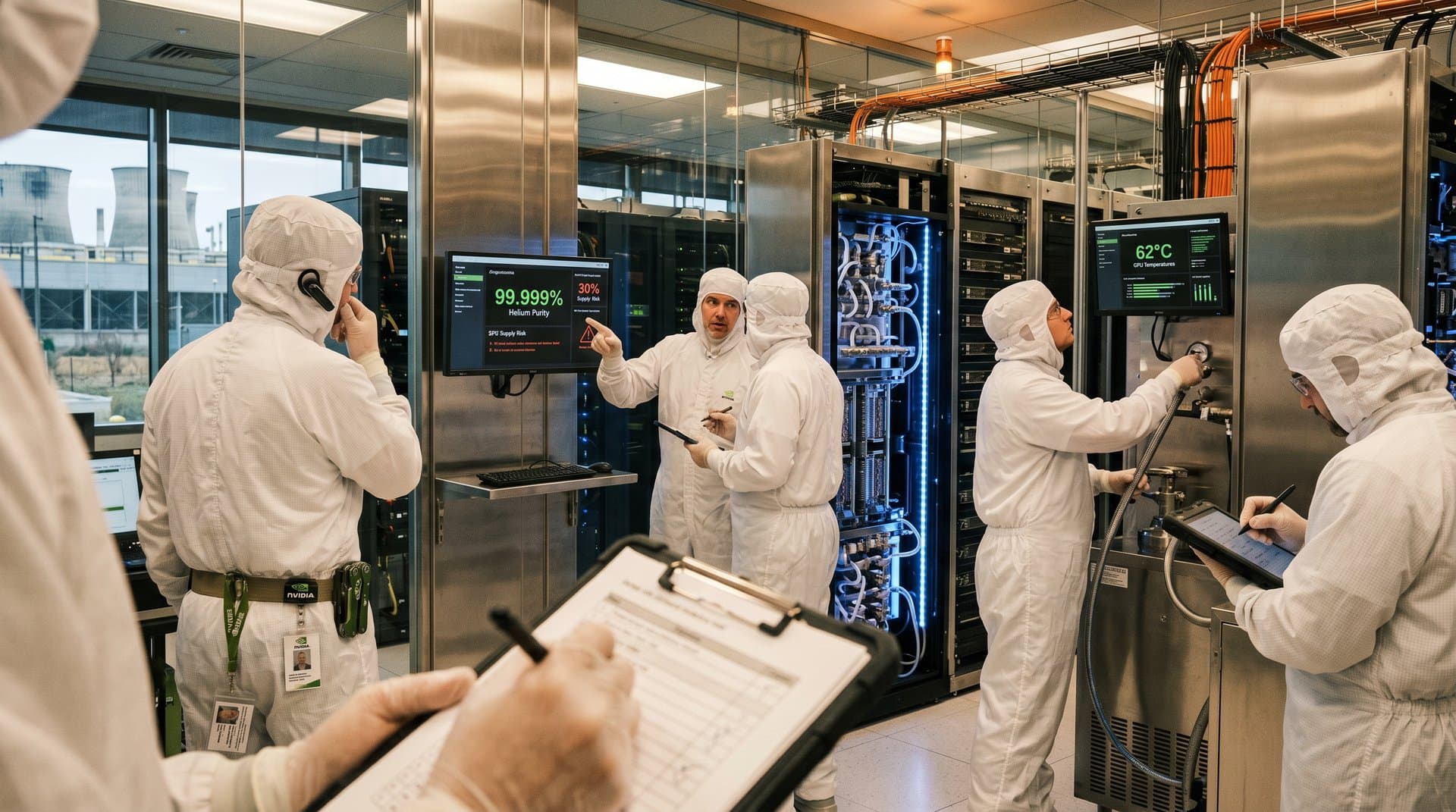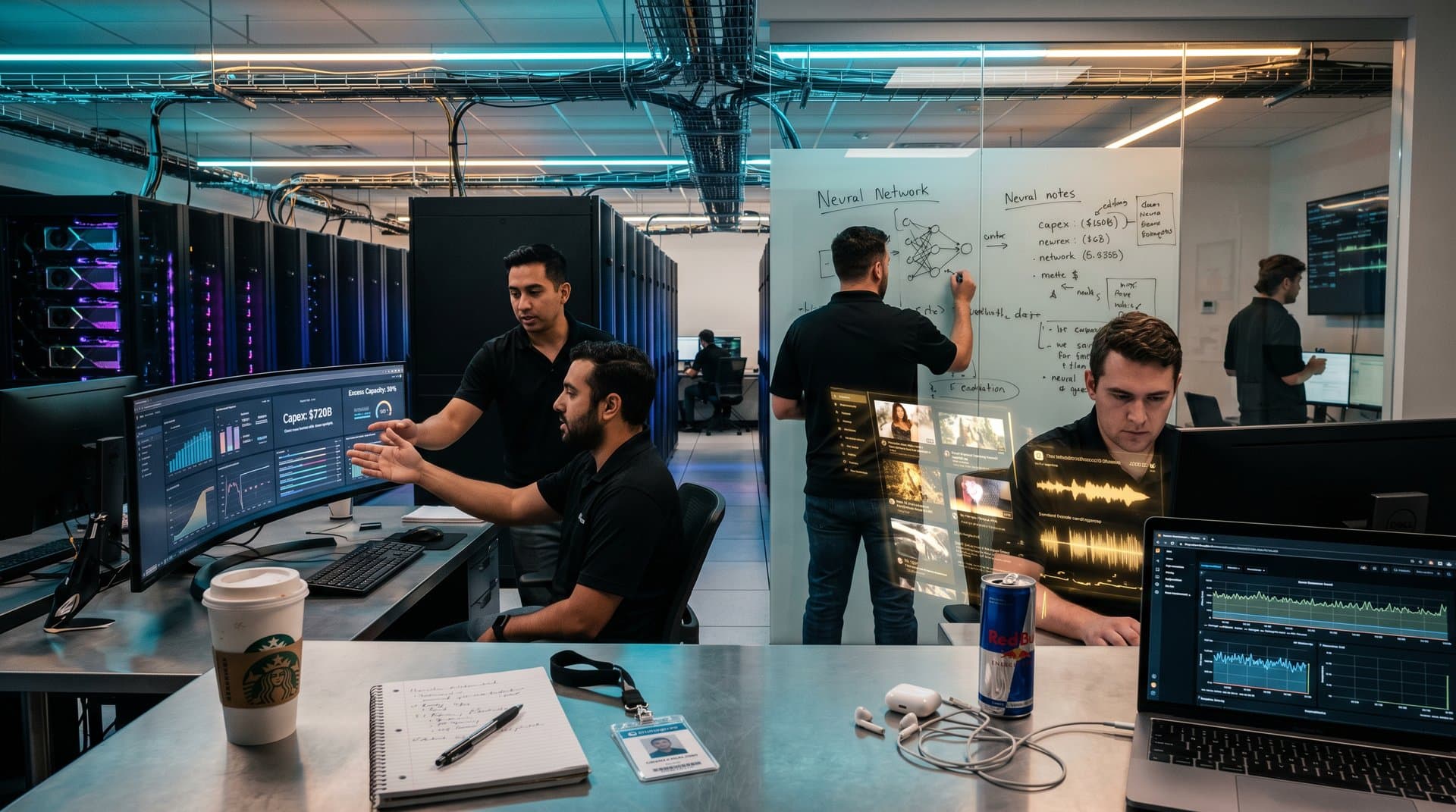
- $720B investment creates 20-30% excess capacity for free AI tools.
- 3-layer AI stack scales creator output 3x on subsidized GPUs.
- $300 credits enable zero-cost workflows and 2-3x efficiency.
By Emma Richardson
Microsoft and Google face the $720B AI Capex Trap through 2027, per The Motley Fool (Oct. 2024). They overbuild Azure and Google Cloud GPU clusters. Excess capacity subsidizes $300 monthly credits and free APIs in Gemini and Claude. Creators scale viral content workflows at zero cost.
Creator Gains from $720B AI Capex Trap
Microsoft Azure powers Descript's transcription service. Creators transform raw footage into TikTok clips using subsidized GPUs. Descript's 2024 benchmarks show 50% faster editing, eliminating $500 monthly software costs for solo operators.
Google Cloud's Vertex AI generates video scripts in seconds. Bloggers input prompts and receive polished content from hyperscaler overprovisioning. Google Cloud case studies report 40% time savings for 100K+ audience creators.
Canva integrates Gemini for thumbnails. Click-through rates rise 20-30%, per Canva's internal tests (2024). Newsletter creators with 10K subscribers add $2K monthly revenue from higher engagement.
Hyperscalers Capex Race Boosts Content Creator Tools
Microsoft and Google forecast 10x AI demand by 2026, per Gartner (Q3 2024). They stockpile H100 GPUs ahead of AWS, creating 20-30% excess capacity.
AWS prioritizes client maintenance capex. Leaders offer $300 AWS Activate credits. Creators build Claude-powered affiliate funnels without compute fees, per AWS documentation.
This capex arms race delivers free tiers. A fintech blogger analyzes crypto trends on Vertex AI, saving $1K in tool subscriptions annually.
Key AI Tools Powered by Hyperscaler Capex
Notion AI on Azure summarizes podcasts. Creators distill hours of audio into 60-second clips, doubling weekly output from three to six episodes.
ConvertKit leverages Gemini for email subjects. Open rates hit 45%, per Beehiiv analytics (2024). Creators with 20K lists gain $3K extra monthly from conversions.
CapCut employs cloud rendering for Reels. TikTok users boost views 10x, from 1K to 10K, via AI thumbnails on overbuilt infrastructure.
Free AI Scales Digital Marketing AI Workflows
Affiliate marketers use Claude for product comparisons. Substack posts achieve 15% higher conversions, per ConvertKit benchmarks (Q4 2024).
Google Cloud BigQuery runs Instagram A/B tests at petabyte scale. Zero-cost analysis reveals 25% engagement lifts for 50K-follower accounts.
Beehiiv embeds AI in newsletters. Subscriber growth doubles to 20% monthly without new hires, fueled by hyperscaler subsidies.
Capex Subsidies Drive Creator Monetization Economics
Sponsors target viral creators. Runway ML videos render on Azure for LinkedIn carousels, cutting production costs 60%.
Teachable deploys Vertex AI quizzes. Course creation speeds up 50%, enabling $5K launches for bootstrapped educators.
Riverside.fm uses cloud transcription. Podcasters reduce editing to four hours per episode, per Riverside case studies (2024), freeing time for sponsorship pitches worth $1K each.
3-Layer AI Stack from AI Capex Trap
Layer 1: Ideation. Gemini produces 10 hooks from trends in two minutes, per Google benchmarks.
Layer 2: Production. Descript and CapCut rely on subsidized GPUs for edits.
Layer 3: Distribution. ConvertKit personalizes emails; Vertex AI tracks engagement metrics.
Workflows scale 3x. Solo creators match agency output, per SignalFire's 2024 creator report.
Long-Term Impact of AI Capex Trap on Creators
Overprovisioning persists to 2027. Free tools undercut agencies charging $5K monthly.
YouTube creators run Ahrefs AI SEO on cloud instances. Fintech bloggers process Glassnode data for premium reports, adding $4K subscriber revenue.
Microsoft and Google lock in creator loyalty with low pricing. Supply outstrips demand, sustaining subsidies.
The $720B AI Capex Trap diversifies creator revenue. Subsidized stacks deliver 2-3x efficiency gains, per SignalFire (2024), powering sustainable digital businesses.
Frequently Asked Questions
What is the AI Capex Trap?
The Motley Fool (Oct. 2024) details Microsoft and Google spending $720 billion on AI growth capex through 2027. Excess capacity subsidizes free tools for creators.
How does AI Capex Trap benefit content creators?
Hyperscalers fund APIs for Gemini, Claude, and Descript. Creators produce viral content, edit videos, and optimize marketing at zero marginal cost.
Which tools gain from hyperscaler capex?
Azure powers Notion AI and Descript; Google Cloud runs Vertex AI and BigQuery. Free tiers from $720B investments accelerate workflows 3x.
What monetization edges come from free AI access?
AI lifts conversions 15%, open rates to 45%, and scales output without hires. Creators outperform agencies using the subsidized stack.