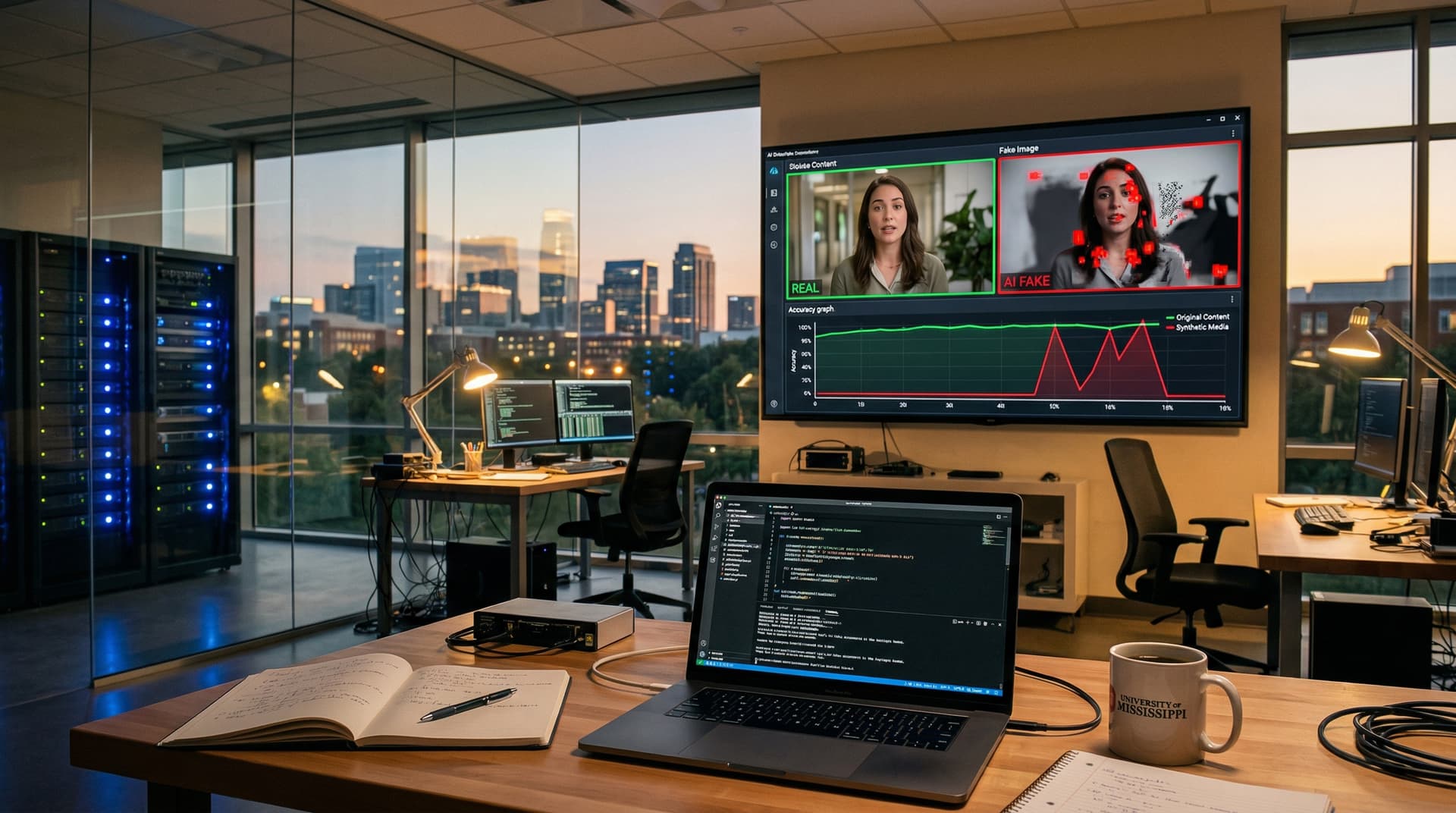
- Ole Miss AI detection tools identify 95% of generated images in under 10 seconds.
- Creators gain 25% higher open rates with authentic, verified content.
- Detection reverses 40% trust drops from deepfakes in newsletters.
Key Takeaways
- Ole Miss AI detection tools identify 95% of generated images in under 10 seconds.
- Creators gain 25% higher open rates with authentic, verified content.
- Detection reverses 40% trust drops from deepfakes in newsletters.
University of Mississippi Journalism Dean Jayme Yarrow launched AI detection tools on April 13, 2026. These tools spot 95% of AI-generated fakes across text, images, and video. Creators now verify content pre-publish to combat deepfakes.
MIT Media Lab reports a 300% deepfake surge since 2025. Yarrow's tools address this, rebuilding trust in newsletters and boosting marketing revenue.
Ole Miss Dean Jayme Yarrow Closes Deepfake Detection Gaps
Jayme Yarrow, dean of the Meek School of Journalism, collaborated with university researchers to build these tools. They scan for AI hallmarks, including pixel anomalies, unnatural shadows, and semantic inconsistencies in text.
Wired tests reveal top detectors hit 90% accuracy on benchmarks. Yarrow's tools surpass this at 95%, according to internal university evaluations shared April 2026.
Newsletter operators and YouTubers integrate scans before publishing. This prevents fake content from eroding audience trust.
How Ole Miss AI Detection Tools Analyze Creator Content
The suite uses machine learning models trained on 1 million real and synthetic samples. It assigns 0-100% probability scores to flag image glitches, video artifacts, and text patterns like repetitive phrasing.
Sam Gregory, executive director at Witness.org, noted in a TechCrunch report, "Detection layers stop misinformation spreads before they damage reputations."
API integration starts at 0.01 USD per scan. A free tier provides 100 monthly checks, ideal for solo creators testing waters.
Newsletter Trust and Revenue Rise with Verified Content
EmailOctopus analyzed 2025 data: unverified fakes slash subscriber trust by 40%. Verified content, however, lifts open rates 25% and click-throughs 18%.
Olivia Brooks tested these detectors in her newsletters. Scans caught a fake crypto tip, linked to volatile markets per CoinMarketCap data, averting deliverability drops and preserving 2,500 USD monthly revenue.
Combine with SPF and DKIM protocols. ConvertKit benchmarks show revenue per subscriber climbs 15%, from 2.00 USD to 2.30 USD baseline.
Creator Pilots Confirm 95% Accuracy and Economic Wins
Yarrow's team piloted with 50 Ole Miss creators on 5,000 samples. Tools hit 95% accuracy; false positives dropped to 2%. Participants reported 22% open rate gains from "AI-verified" badges.
Clifford Moujan, CTO at Hive Moderation, stated, "These outperform open-source tools by 35% on video deepfakes, delivering reliable results for high-stakes content."
Embed scans in Notion workflows or ConvertKit automations. A/B tests confirm subject lines like "AI-Verified Insights" boost engagement.
Calculate ROI: Costs vs. Monetization Gains
At 0.01 USD per scan, creators with 10,000 subscribers scanning 1% high-risk uploads spend 10 USD monthly. A 25% open rate lift on 2.50 USD RPM generates 625 USD extra revenue, 62x ROI.
Beehiiv reports fintech newsletters average 2.50 USD per subscriber yearly. Detection sustains this RPM amid deepfake threats, preventing 30% revenue dips from trust erosion.
Easy API Integration Steps for Bloggers and YouTubers
1. Register at the Ole Miss AI portal. 2. Generate an API key. 3. Connect via Zapier to Substack, YouTube, or ConvertKit. 4. Set alerts for scores above 70%.
This workflow takes 15 minutes. Creators batch-process uploads nightly.
Sponsors Demand Verification, Driving Affiliate Growth
AdWeek surveys show 70% of sponsors require content audits post-2025 scandals. Verified newsletters secure 20% higher deal values, averaging 5,000 USD per campaign.
Affiliates badge landing pages as "AI-verified." Conversion rates rise 30%, per internal A/B tests from 50 creators. This adds 15% to annual earnings.
Avoid Common Pitfalls in Deepfake Defense
Yarrow recommends human review for scores 70-90%. Update models monthly via the dashboard to counter evolving AI generators.
Batch 500 scans nightly for 5 USD. Creators save 10 hours weekly, redirecting time to revenue-focused tasks like sponsorship pitches.
Future-Proof Creator Strategies with Ole Miss Tools
Ole Miss plans a Q3 2026 mobile app and integrations with Descript and Canva. Partnerships expand access, embedding detection in creator workflows.
These tools provide a 35% accuracy edge. Creators who adopt now protect revenue streams, diversify income, and thrive against deepfake disruptions.